
St. Louis Weekly Arrest Log Sources
The city publishes no single weekly booking blotter. No multi-day arrest archive exists either. Two official sources cover pieces of it. The St. Louis Metropolitan Police Department posts selected preliminary crime and arrest releases through its Crime and Investigations stream. The Division of Corrections locator is separate. It searches people released in the past 72 hours. The SLMPD stream is news driven. Public Affairs staff update it on weekdays, and it notes that initial information can change. It never claims to name every person booked at the Justice Center. The release view is person based and short lived. It is not a browsable seven-day register. Counting headlines will not rebuild a week, either. One release may describe an arrest, an investigation, or charges filed after an earlier event. A Justice Center entry reflects a custody event, so keep event, publication, arrest, and release dates separate when building a timeline.
How to Read the St. Louis Blotter
Begin with the agency and the date. Then tell an incident release apart from a jail result, so a selected police story never stands in for a full St. Louis roster.
- Open SLMPD’s Crime and Investigations page and note the date on each release.
- Read the named location, alleged event, arrest or charge statement, and the agency attribution in the release.
- Move backward through available pages for prior weekdays, while recognizing that selection is editorial and operational.
- For one named person, search the CJC locator’s Active Inmates and Released in past 72 hours options.
- Use the case number, when available, to check the later court docket and outcome.
- For a record beyond the public windows, submit a focused police-report or City Sunshine request.
The Daily Arrest Report covers same-day lookups. That route fits someone still in police processing. The official SLMPD release stream shows how selected reports are organized.
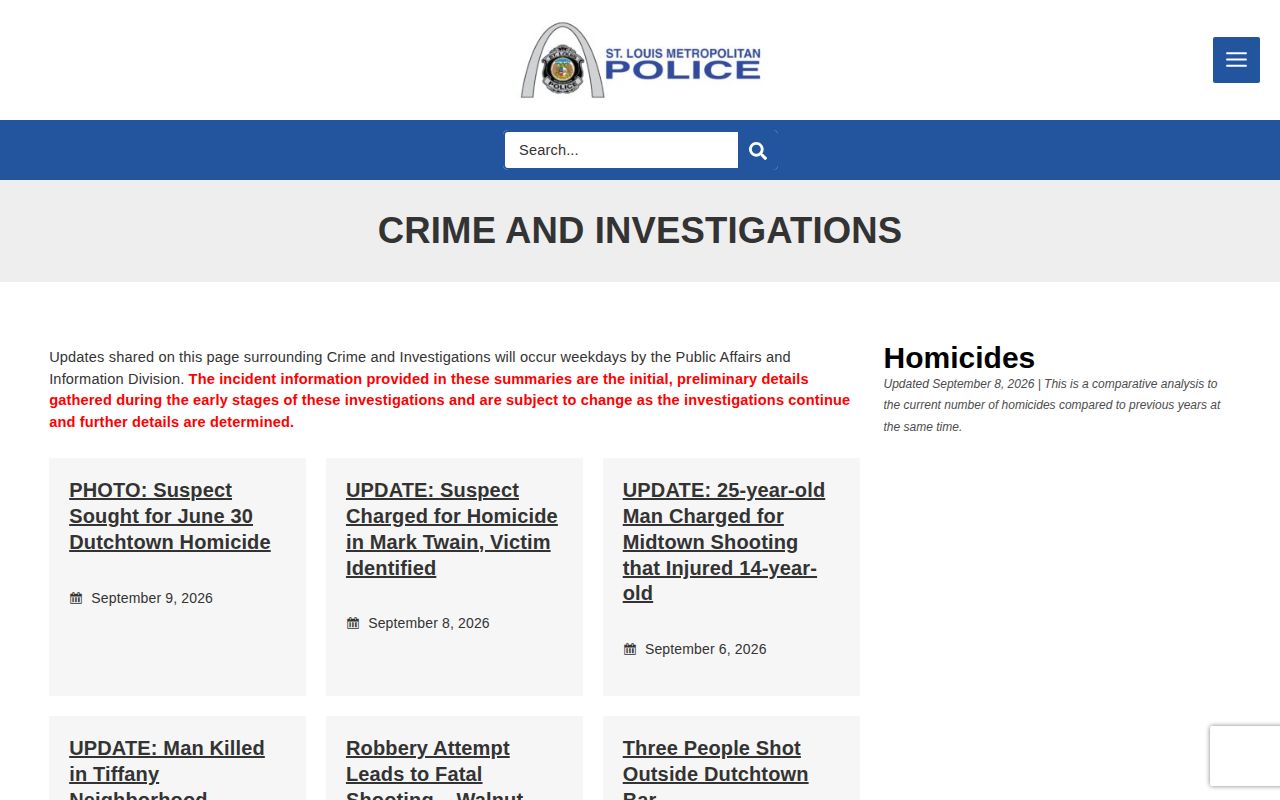
The SLMPD publication channel is a police news feed, not a complete jail booking feed.
Fields Across St. Louis Arrest Records
No standard weekly entry format exists. The police stream and the Justice Center locator expose different fields, so keep each piece of St. Louis arrest data tied to its source.
| Item | Where and what it means |
|---|---|
| Release date and incident details | SLMPD selected release; preliminary information can change. |
| Name and alleged charge | May appear in an arrest-related police release or observed locator result; it is not a conviction. |
| Facility and custody status | CJC locator fields used to distinguish active custody from recent release. |
| Arrest or release date/time | Observed in the locator interface and useful for chronology, but not promised as a permanent archive. |
| Case number and next court date | Observed locator fields that can connect the event to court follow-up. |
| Photo | Not guaranteed. The inspected public locator result showed an unavailable-photo placeholder. |
One source alone never tells the whole story. An SLMPD release can discuss an arrest while the person is no longer at the Justice Center. A released-person result proves custody but skips the narrative. Court disposition comes much later. Photo rules differ too. SLMPD or a news outlet may publish an image with a story. The CJC locator promises no booking photo, and its results show an unavailable placeholder in the photo area. A missing public image does not mean no internal booking image exists.
Weekend St. Louis Arrest Reporting
No source says St. Louis arrests spike on weekends. No fixed holiday publishing schedule exists either. SLMPD's Public Affairs and Information Division updates its release page on weekdays only. A weekend arrest may get described days later. Some weekend events never become public releases. The Justice Center locator runs on its own clock. Admissions, bonds, transfers, and releases can shift it at any time. Its event-driven updates should not be confused with SLMPD's weekday news rhythm. A Monday check can surface a weekend police release, yet it still yields no complete weekend arrest roster.
Note: A later publication date may reflect a weekday release schedule, not the date when the underlying arrest occurred.
St. Louis Arrest Archives and Retention
That 72-hour window is only about visibility. It is not a retention period. Missouri retention schedules treat arrest records as records. Logs, files, registers, fingerprints, and booking sheets all fall under a five-year minimum with secure destruction. Agencies can keep records longer. Litigation or an investigative-file rule can change the schedule too.
Photographs and other biometrics usually go to the Missouri Highway Patrol Central Repository. A local copy may just be a reference copy. A vanished web result does not prove the record was destroyed. A search snippet does not prove it still exists.
For an older modern record, start with a City Sunshine request to the Division of Corrections. Ask for the booking record, its retention series, and whether it was retained, transferred, sealed, expunged, or lawfully destroyed. A separate SLMPD request may cover the incident or arrest report. Missouri Case.net or Municipal Court holds the court history.
The Missouri State Archives–St. Louis branch serves historical research. It is not a modern Justice Center arrest-log archive. Its holdings reach much older court material. No automatic transfer sends expired CJC booking sheets there. A modern inquiry belongs with Corrections, SLMPD, the courts, or the Highway Patrol repository, depending on record type.
Selected St. Louis Crime News
News coverage adds context to a reported incident. It still is not an arrest log. First Alert 4's crime section gathers selected stories from the City, St. Louis County, and nearby Illinois. The Post-Dispatch crime and courts page makes its own choices among police and court developments, often behind a paywall.
Start with official SLMPD releases. A missing name in the news proves nothing about whether an arrest happened, since editors pick stories for their own reasons. Watch jurisdiction in every piece. The word St. Louis may mean the independent city, St. Louis County, or the broader metro. Commercial arrest directories carry an extra trap here, because some pages labeled St. Louis resolve to the County rather than the City.
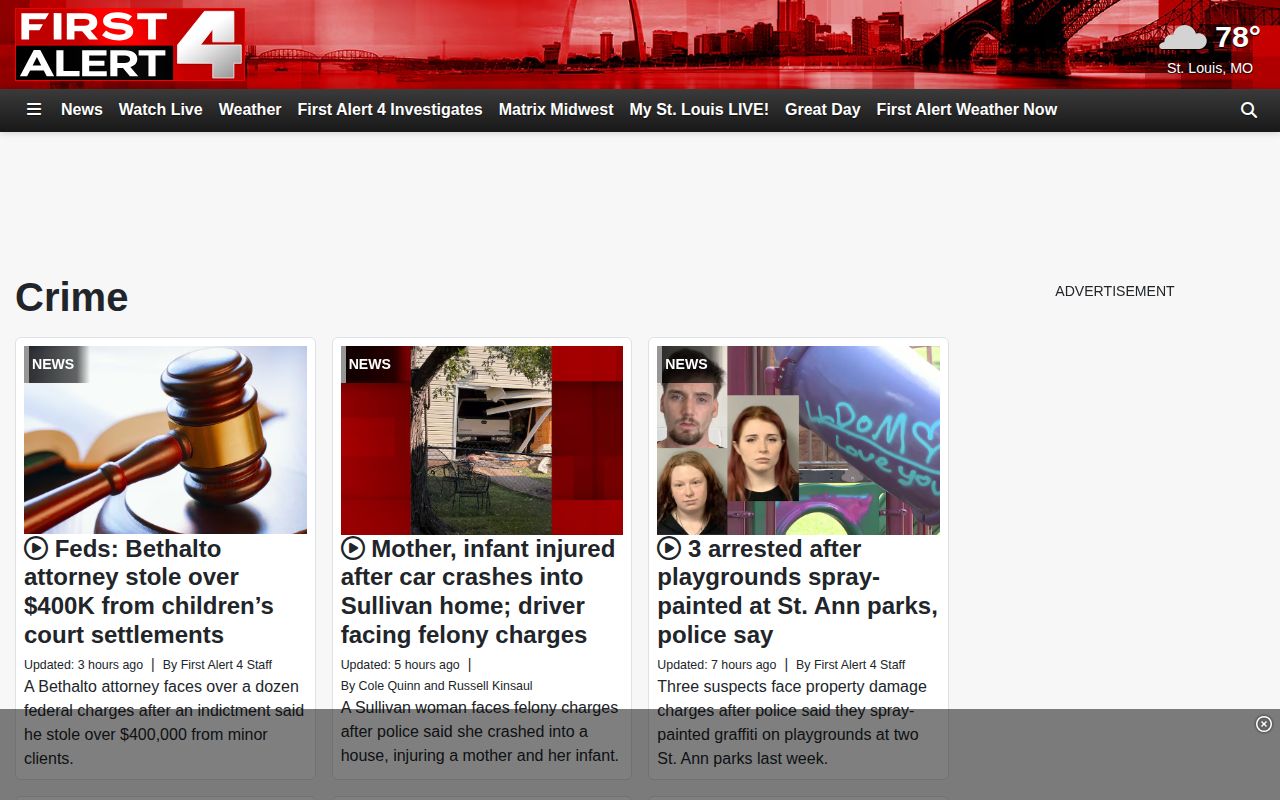
Local follow-up coverage adds color, yet it stands apart from the City custody locator and the court record. The Post-Dispatch crime and courts page is one more selective local source.
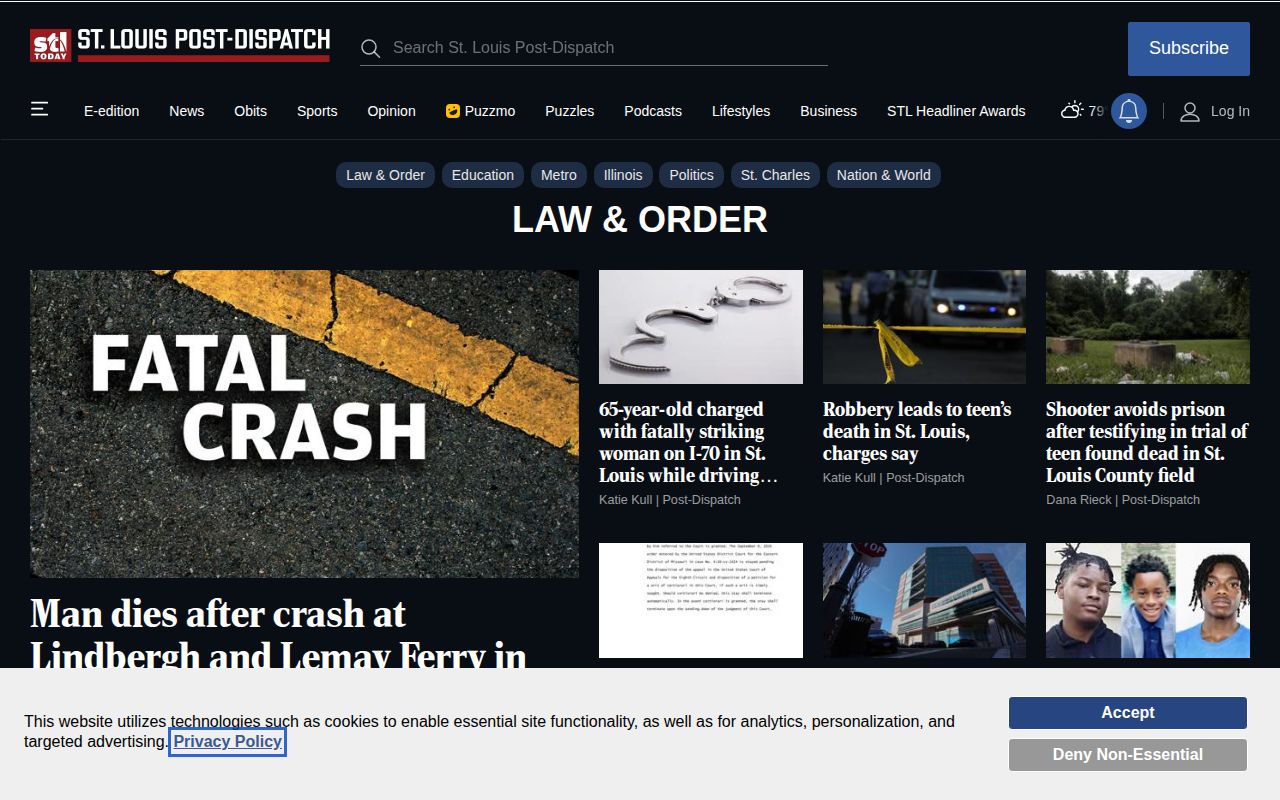
This capture represents journalism and court coverage, not a complete City booking archive.
Why Arrest Stories Do Not Show Trends
News stories make bad trend evidence. A stack of releases proves nothing about direction. SLMPD picks which preliminary incidents get a public release, and editors then pick which of those become stories. A week of headlines is a sample built on two layers of choice, not a count of everyone arrested in St. Louis. The Corrections dashboard tracks the inmate population overall, yet it never lists who was booked in a given week.
Match the tool to the question. Trend work needs a defined official dataset with a stated period and geography. A custody question goes to the named-person locator. A case outcome belongs in the court record. Blending weekly news with jail counts invites false readings, because those systems measure different events.
SLMPD's post-2023 CompStat material helps here. It reports 7-day, 28-day, and year-to-date comparisons, and it explains how weekly figures are finalized after the closing date. Those aggregates give real context for St. Louis arrest patterns. Numbers alone stay anonymous. They cannot name every person arrested, so they are no substitute for a custody search.
For an old arrest that is missing online, name the record series and a narrow date range in the request. Corrections holds the booking sheet and release record. SLMPD holds the arrest or incident report. The court holds the filed case. That layering keeps police selection, jail custody, and judicial disposition distinct.